
Research Brief
Maasai Community Governance of Groundwater Access During Drought in Northern Tanzania
Region: Africa
Associated Platforms
Published by UNDRR PreventionWeb
Food and Agriculture Organization of the United Nations (FAO)
Author: Stephanie Zabriskie
ORCID: 0009-0000-9273-1529
Affiliation: Humanculture (Indigenous-led nonprofit organization)
Capacity: Founder and Executive Director
_______________________________________________________
Summary
In dryland pastoral regions where formal water infrastructure is limited, Indigenous governance systems can function as locally embedded forms of disaster risk reduction. This brief documents a groundwater access system maintained by Maasai pastoral communities in northern Tanzania, where distributed water access points are governed through community leadership structures and customary institutions. The system coordinates livestock movement, household water use, and pasture recovery during periods of drought. By combining environmental observation with collective decision-making, these locally governed systems help sustain household water continuity, protect rangeland ecosystems, and stabilize pastoral livelihoods during prolonged dry periods. The case illustrates how Indigenous governance systems can operate as resilience infrastructure in drought-prone environments where centralized water systems are difficult to maintain across large landscapes.
The Risk Context
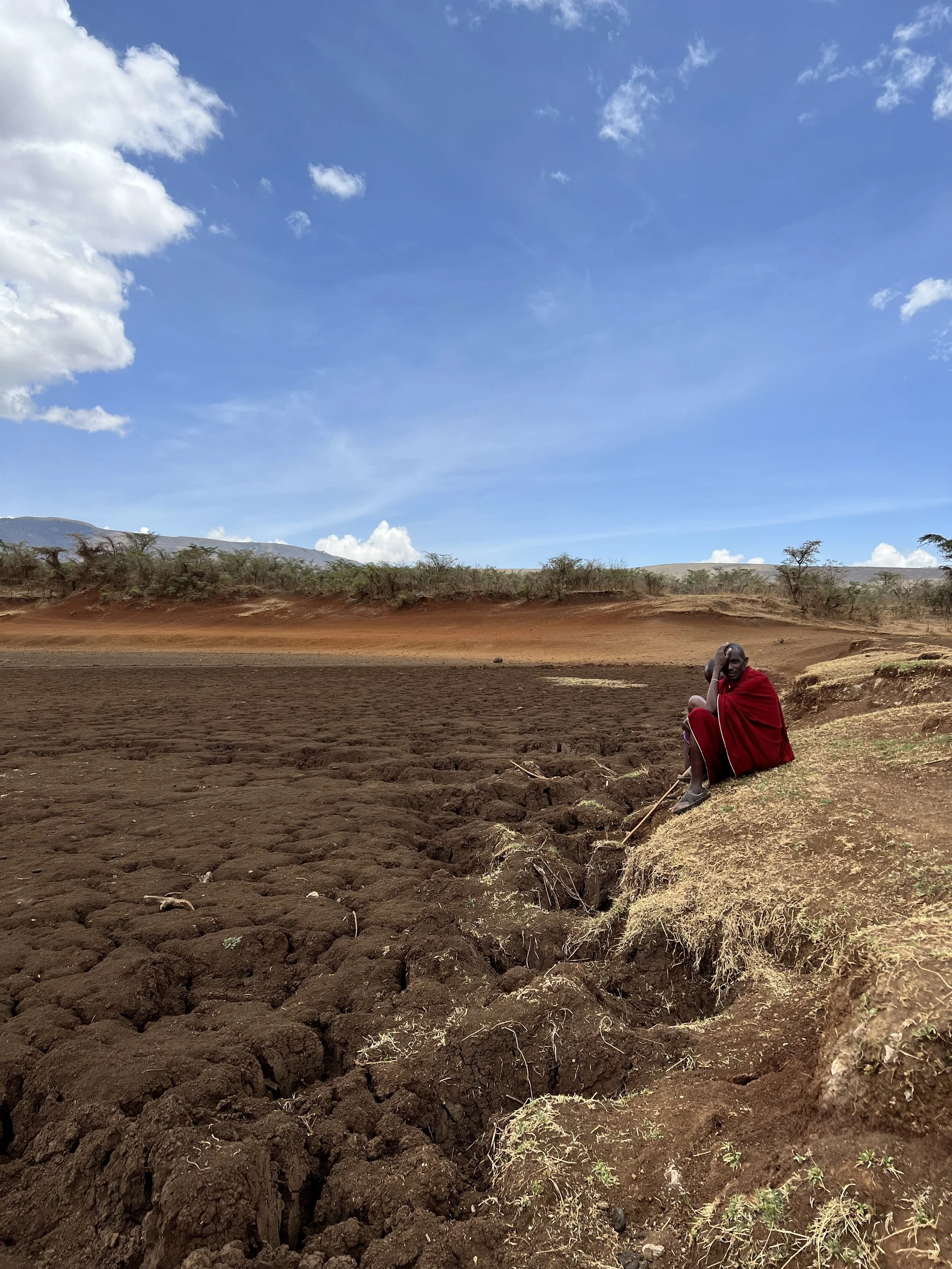
Recurring drought is a major driver of disaster risk in semi-arid pastoral regions of northern Tanzania. Increasing rainfall variability and extended dry seasons place pressure on groundwater resources, pasture systems, and household livelihoods. For pastoral communities whose food security and income depend on livestock, drought can quickly translate into livestock loss, reduced milk production, and economic instability.
In many pastoral landscapes, centralized water infrastructure is limited or difficult to maintain across large rangelands. As a result, communities rely on locally governed systems that coordinate access to water, grazing areas, and ecological resources under conditions of scarcity. In this context, drought risk is not only an environmental challenge but also a governance challenge requiring coordinated decision-making across households, livestock herds, and seasonal ecological conditions.
The Governance System
Maasai pastoral communities maintain long-standing governance systems that regulate access to water sources, grazing territories, and seasonal land use. These systems operate through community leadership structures including councils of elders, women’s councils, and other local decision-making institutions that coordinate resource allocation and resolve competing demands during drought periods.
Water access is managed through distributed groundwater points including shallow wells, seasonal pans, and subsurface catchments. These water sources are governed through customary rules that regulate when and how herds access water, how long they remain at a particular site, and when livestock must move to allow pasture and water resources to recover.
Decisions are informed by environmental observation, seasonal conditions, and intergenerational knowledge regarding how landscapes behave under drought. Through these coordinated systems, communities align livestock mobility, water access, and grazing patterns in ways that help prevent overuse of fragile rangeland ecosystems.
Practice Example
In several Maasai communities in northern Tanzania, groundwater access and grazing alignment are coordinated through distributed water access nodes governed through customary institutions. These access points function as locally managed infrastructure where water access decisions are collectively coordinated rather than centrally controlled.
The system combines ecological observation with social coordination mechanisms that regulate livestock movement, water use timing, and pasture recovery. Community leadership structures determine when herds move between grazing areas and water sources in order to reduce pressure on fragile landscapes during drought periods.
Because decisions are made locally and adapted continuously to environmental conditions, communities are able to respond quickly to changing drought conditions while maintaining ecological balance across large rangeland territories.
Observed Outcomes
Community coordination of water access and livestock movement contributes to several resilience outcomes:
• improved continuity of household water access during drought periods
• reduced pressure on individual water sources and grazing areas
• protection of vegetation recovery and broader ecosystem functions
• stabilization of pastoral livelihoods during extended dry seasons
Locally coordinated resource access can also reduce the likelihood of conflict over water and grazing resources during drought periods by providing shared rules for resource use across households and herds. These outcomes demonstrate how community-governed systems can function as resilience infrastructure in environments where large-scale water infrastructure investments are limited or difficult to sustain.
Implications for Disaster Risk Reduction
This practice illustrates how disaster risk reduction in pastoral drylands can operate through Indigenous governance systems that coordinate water access, livestock mobility, and environmental stewardship. Rather than relying exclusively on centralized infrastructure, resilience can emerge through distributed decision systems embedded within communities. This example is also relevant to Sendai Framework priorities by showing how community-based systems contribute to understanding risk, reducing underlying vulnerability, and strengthening resilience in drought-prone environments.
Recognition of these governance structures can strengthen disaster risk reduction strategies in drought-prone regions by integrating locally governed coordination mechanisms with broader environmental and development policies. Such systems demonstrate how locally grounded knowledge and collective decision-making can help communities manage environmental stress while sustaining livelihoods under increasing climate variability.
Documentation
Further documentation of this pastoral adaptation system is available through the FAO Family Farming Knowledge Platform:
Zabriskie, Stephanie. 2026. Indigenous Systems of Distributed Groundwater Access for Family Farming Under Prolonged Drought. FAO Family Farming Knowledge Platform. Food and Agriculture Organization of the United Nations. https://www.fao.org/family-farming/detail/en/c/1756835/
